The room children use in sessions: everything at child height, every material with a purpose.
What is in the playroom?What’s in the room, and what for?
Every material has a job. Tap the dots on the photo; from the sand tray to the puppets, I explain why each one is there.Yes, there are toys. But there’s also a corner for teens: cushions, books, a sketchbook. Check the dots.
1Sand tray
In the blue-bottomed tray sand becomes land and water; the scene a child builds becomes a map of their inner world. Digging, smoothing and shaping the sand also calms the body.Building a scene in sand is an easy way to show something hard to say.
2Miniature figures
People, animals, houses, trees, bridges, vehicles… The child builds their story with figures; scenes of family, school or fear are told through these small characters.There are hundreds of figures on the shelves; teens use them too.
3Paint and drawing
Colour and line where words are not enough. Drawings show us the child’s mood and world that week; we look together rather than interpret.The sketchbook is yours; you don’t have to show anyone what you draw.
4Blocks
Build, knock down, build again. Blocks let us work on patience, planning and coping with frustration within play.
5Puppets
Saying something through a puppet is easier than saying it yourself. Puppets let us talk about fears, anger and difficult conversations from a safe distance.
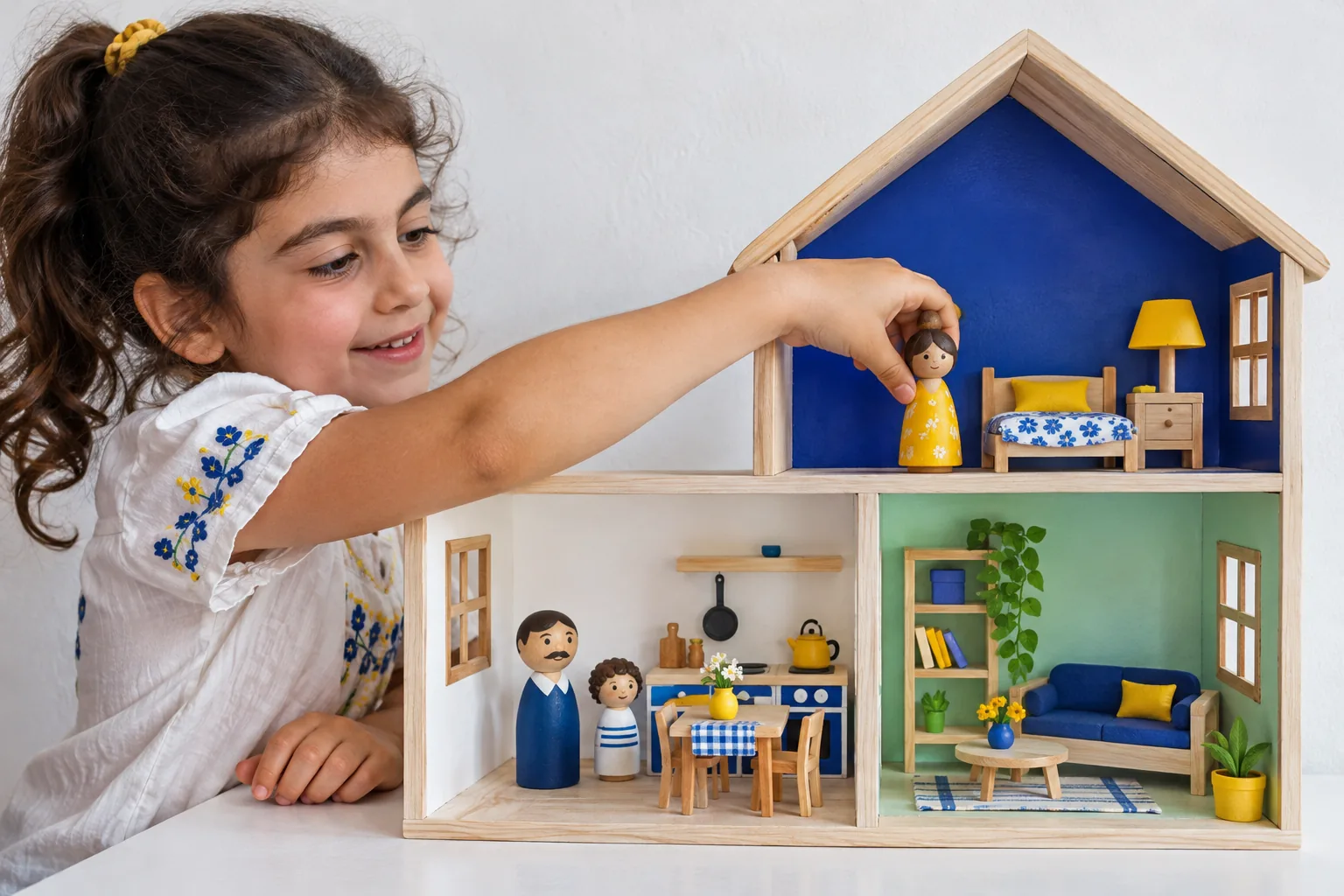
6Dollhouse
With its rooms and little family, the dollhouse is the most natural way for a child to show routines at home, sibling relationships and daily life.
1 / 6
Why play?
A child’s language
Young children find it hard to put feelings into sentences; in play they show them easily.
A safe distance
Giving something frightening to a figure or a puppet makes it easier to talk about.
A place to try things
Trying a new behaviour or a new solution in the room is safe; getting it wrong is allowed.
From the room
Not sure where to start? Let’s talk for 15 minutes.If you like, let’s just talk for 15 minutes first.
The free intro call is by phone or online; then we decide together.Write with your family, or write first yourself; we’ll decide together how to start.