Child and adolescent psychology · Karşıyaka, İzmir and online parent meetingsAges 13–18 · Karşıyaka · talking, drawing or staying quiet are all fine
What your child can’t say,
they show in play.You don’t need the right words
to say what’s on your mind.
Play therapy, settling into school, anxiety, attention and talking with teens. I listen to you first, then we meet your child in the playroom.Nobody here tries to fix you. School, friends, tension at home or a feeling you can’t name; we start wherever you want.
Every age has its own language. Tap a block: common topics at that age, when to seek support and how the first meeting goes.The 13–18 block is for you. Look at the others too; maybe for a younger sibling.
Preschool: a world told through play
At this age children show feelings through behaviour and play. Short-lived struggles are part of development; those that last and narrow the day need attention.
As school life begins the child’s world widens: teachers, friends, homework and rules. At this age children start to tell their story through both play and words.
Adolescence is a time of separating from the family and searching for identity. Closed doors are often normal, but they can also signal a load the teen can’t carry.Feeling confused, arguing often with your family, feeling that nobody understands you — all very common at this age. You don’t need a “big problem” to talk to someone. What you say stays with me; the only exception is your safety or someone else’s.
What is in the playroom?What’s in the room, and what for?
Every material has a job. Tap the dots on the photo; from the sand tray to the puppets, I explain why each one is there.Yes, there are toys. But there’s also a corner for teens: cushions, books, a sketchbook. Check the dots.
In the blue-bottomed tray sand becomes land and water; the scene a child builds becomes a map of their inner world. Digging, smoothing and shaping the sand also calms the body.Building a scene in sand is an easy way to show something hard to say.
2Miniature figures
People, animals, houses, trees, bridges, vehicles… The child builds their story with figures; scenes of family, school or fear are told through these small characters.There are hundreds of figures on the shelves; teens use them too.
3Paint and drawing
Colour and line where words are not enough. Drawings show us the child’s mood and world that week; we look together rather than interpret.The sketchbook is yours; you don’t have to show anyone what you draw.
4Blocks
Build, knock down, build again. Blocks let us work on patience, planning and coping with frustration within play.
5Puppets
Saying something through a puppet is easier than saying it yourself. Puppets let us talk about fears, anger and difficult conversations from a safe distance.
6Dollhouse
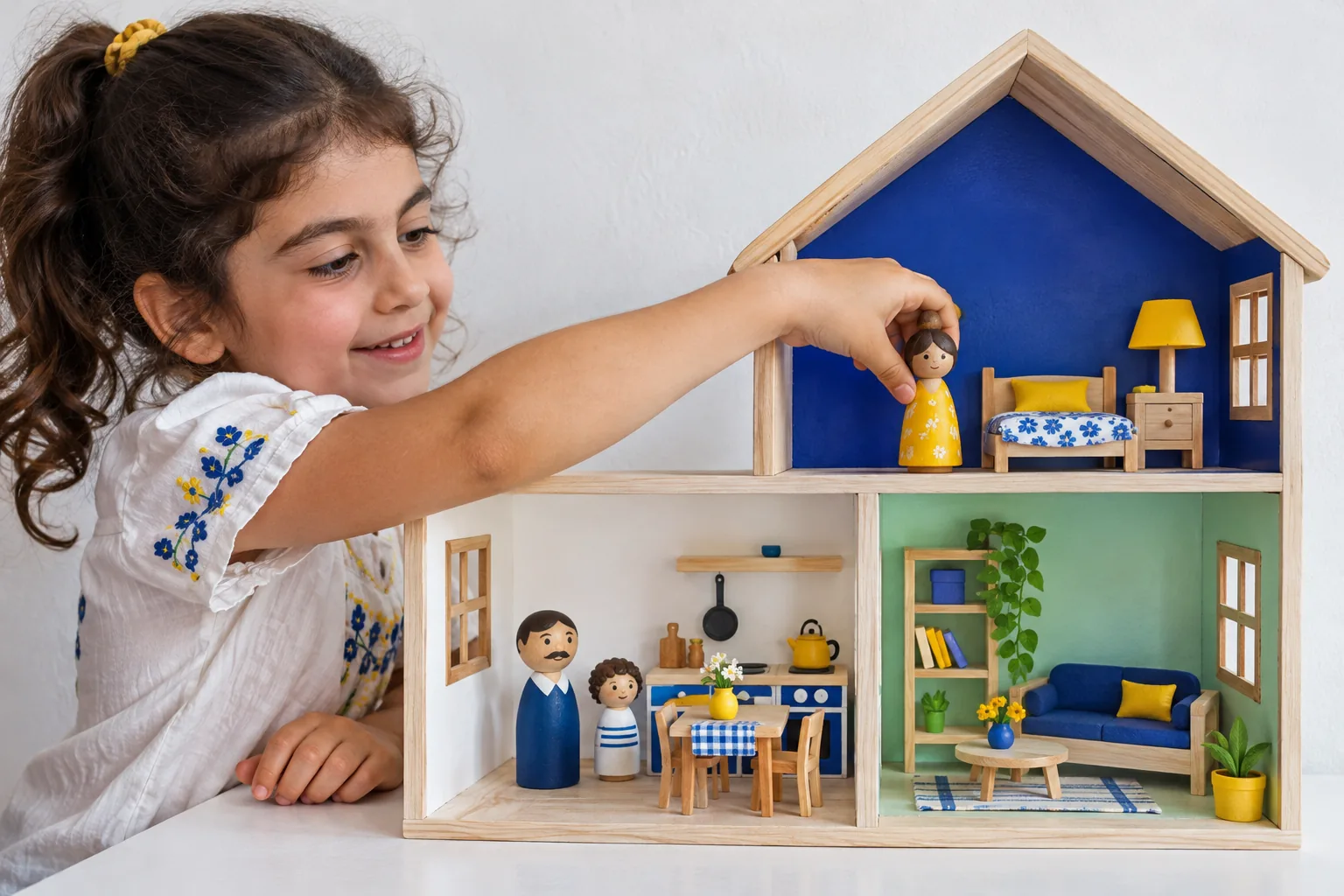
With its rooms and little family, the dollhouse is the most natural way for a child to show routines at home, sibling relationships and daily life.
1 / 6
Hello, I’m Zeynep Aydın.
I work through play with children and through conversation with teens.I’m a psychologist who tries to speak your language.
I have worked with children, teenagers and their families for more than ten years. Every child who comes to the room has their own story; my job is to listen to it without hurrying and to find, together with the parents, steps that make the child’s day a little easier.Nobody grades you here. You share as much as you want; the rest we talk about over time, at your pace.
BSc PsychologyEge University · 2008–2012
MSc Developmental PsychologyHacettepe University · 2012–2015
Child-Centred Play Therapy trainingApplied training + supervision · 2016
Denver II Developmental Screening Test practitioner training2017
Cognitive behavioural therapy with children and adolescents2018
How do I know whether my child needs a psychologist?
Short-lived struggles are part of development. If a behaviour or feeling lasts more than a few weeks, keeps growing and affects sleep, school or friendships, it is a good idea to talk to a professional. If you’re unsure, we can talk it through in a free 15-minute intro call.
How should I tell my child where we are going?
Simply, without lying and without presenting it as a punishment: “We’re going to meet someone who plays and talks about feelings.” For young children, looking at photos of the playroom together also helps.
What if my child doesn’t want to come?
This is very common. The first meeting is with parents anyway; we plan together how to help the child feel ready. With teens, leaving part of the decision to them makes it easier.
How long does play therapy take?
The child’s needs set the length; I don’t promise a number of sessions in advance. We review the process together in parent meetings every four to six weeks.
Does a developmental assessment give a diagnosis?
No. Screening shows whether a child needs support in an area. If a diagnosis is needed I refer you to the relevant specialist, such as child and adolescent psychiatry or paediatric neurology.
Can you tell me whether my child has ADHD?
ADHD is diagnosed by a child and adolescent psychiatrist. I carry out assessment and observation, refer to psychiatry if I think it is needed and provide psychological support throughout.
Will my family find out what I say?
No, I don’t repeat your exact words. I give your family general updates, but I talk to you first about what I’ll say. The only exception is if your safety or someone else’s is in danger; even then I talk to you first.
Do I need a big problem to come?
No. School, friends, tension at home or just a very full head is reason enough.
What if I don’t want to talk?
Nothing happens. You can draw, play a game or stay quiet for a while. You set the pace.
Can I come without my family knowing?
If you are under 18, sessions start with your family’s consent. But we can think together about how to tell them; you can also ask a question on WhatsApp first.
What should I do if I have thoughts of hurting myself?
Call 112 straight away or tell an adult near you immediately. These thoughts can be talked about and help is available; you are not alone.
Will you tell me what is said in sessions?
I regularly share my general observations and where the process is heading, but not the details of play and conversations. If the child’s or anyone else’s safety is at stake, I will always share it with you.
Not sure where to start? Let’s talk for 15 minutes.If you like, let’s just talk for 15 minutes first.
The free intro call is by phone or online; then we decide together.Write with your family, or write first yourself; we’ll decide together how to start.